

Print it, save it, or add it to your recipe binder.
Maple Dijon chicken potato bake coats chicken breasts, sliced potatoes, and onion with a sweet, tangy sauce. Pure maple syrup balances the mustard, and the pan juices coat the tender potato layers.
The potatoes begin baking before the chicken goes in. That simple change gives the slices time to soften without keeping lean chicken breasts in the oven for a full hour.
Why This Recipe Works
Raw potato slices and chicken breasts do not necessarily finish at the same time. A covered potato head start makes it easier to check each component separately.
The sauce uses no cream or cheese. Its richness comes from the oil, mustard, and syrup, so the finished potatoes are saucy rather than a dairy gratin.
Ingredients and Preparation
- 4 boneless skinless chicken breasts, about 6 ounces each
- 1 1/2 pounds potatoes, sliced 1/8 inch thick
- 1 small onion, thinly sliced
- 1/2 cup Dijon mustard
- 1/2 cup pure maple syrup
- 1/4 cup chicken broth, plus more if needed
- 2 tablespoons olive oil
- Salt and pepper, to taste
- Fresh parsley, optional
Chicken: Similar-sized breasts cook more evenly. Very large breasts may need a different timing; do not assume four pieces always weigh the same.
Mustard and syrup: Dijon varies in salt and sharpness. Use pure maple syrup for the intended flavor, and keep any sauce that touches raw chicken separate from clean serving utensils.
How to Make Maple Dijon Chicken Potato Bake
Step 1
Heat oven to 375 degrees F; grease a 9×13-inch dish. Whisk mustard, syrup, broth, oil, and pepper. Salt lightly.
Step 2
Toss potatoes and onion with half the clean sauce in dish. Cover tightly; bake 30 to 40 minutes until nearly tender. Keep remaining sauce separate from raw chicken.
Step 3
Arrange chicken over potatoes; spoon remaining sauce on top. Cover and bake 15 minutes, then uncover and cook 10 to 15 minutes more as needed.
Step 4
Check every breast reaches 165 degrees F and potatoes are tender. If chicken finishes first, remove to a clean plate and finish potatoes separately. Tent if glaze darkens.
Step 5
Rest chicken 5 minutes. Spoon cooked pan sauce over servings; garnish with parsley.
Tips for the Best Texture
Slice potatoes consistently and seal the foil tightly for their first bake. Test a middle slice with a thin knife before adding the chicken; it should already be nearly tender.
Use a thin layer of sauce over the chicken. Syrup can darken quickly, so protect the surface with foil if it gets too brown before the center is ready.
If chicken finishes first, move it to a clean plate and let the potatoes continue. Do not keep cooking done breasts just because a few thick potato slices are still firm.
Timing and Doneness
The estimate allows roughly an hour of oven time, but the actual finish depends on potato thickness and chicken size. Start checking the breasts after about 25 minutes of their cooking time.
Each breast must reach 165 degrees F in its thickest area, avoiding bone if using a different cut. The official temperature chart lists poultry temperatures.
Serving Ideas and Variations
Serve with steamed green beans, a crisp salad, or broccoli for a fresh contrast to the glaze. No additional starch is needed because the potatoes are already in the pan.
Use a little whole-grain mustard alongside Dijon for texture, but keep the overall mustard quantity the same. Boneless thighs can be used with their own timing and the same minimum temperature.
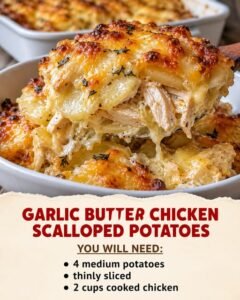
For more meals with similar ingredients, try brown sugar roast chicken with carrots, garlic butter chicken scalloped potatoes.
Make-Ahead, Storage, and Reheating
Whisk the sauce and slice the onion ahead; refrigerate them. Keep raw chicken covered separately and slice potatoes close to baking. Do not partially bake raw chicken for later finishing.
Refrigerate cooked portions within 2 hours, or within 1 hour above 90 degrees F. Use shallow containers and keep at 40 degrees F or below. Use within 3 days, sooner when an ingredient was already near the end of its safe storage time. Making a new dish does not reset the age of previously cooked meat or rice.
Reheat leftovers to 165 degrees F in the center, checking more than one spot in a thick portion. Cover portions and add a small splash of broth if the potato layer has dried. The USDA leftovers guide explains prompt cooling and safe reheating.
For longer storage, freeze cooled individual portions airtight for up to 2 months for quality. Thaw in the refrigerator before reheating. The sauce may thin slightly after thawing.
Frequently Asked Questions
Why not bake everything together from the start?
Can I use pancake syrup?
Is this a creamy casserole?
What if the sauce gets too dark?
Final Serving Notes
Serve once both the chicken and potatoes pass their own doneness checks. The potato head start and a thermometer make the timing much easier to manage.
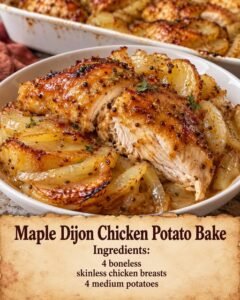
Maple Dijon Chicken Potato Bake
Chicken breasts and sliced potatoes in a sweet maple-Dijon sauce, with a potato head start to keep the chicken from overcooking.
Prep: 20 min | Cook: 60 min | Total: 85 min
Servings: 4 servings
Ingredients
- 4 boneless skinless chicken breasts, about 6 ounces each
- 1 1/2 pounds potatoes, sliced 1/8 inch thick
- 1 small onion, thinly sliced
- 1/2 cup Dijon mustard
- 1/2 cup pure maple syrup
- 1/4 cup chicken broth, plus more if needed
- 2 tablespoons olive oil
- Salt and pepper, to taste
- Fresh parsley, optional
Instructions
- Heat oven to 375 degrees F; grease a 9x13-inch dish. Whisk mustard, syrup, broth, oil, and pepper. Salt lightly.
- Toss potatoes and onion with half the clean sauce in dish. Cover tightly; bake 30 to 40 minutes until nearly tender. Keep remaining sauce separate from raw chicken.
- Arrange chicken over potatoes; spoon remaining sauce on top. Cover and bake 15 minutes, then uncover and cook 10 to 15 minutes more as needed.
- Check every breast reaches 165 degrees F and potatoes are tender. If chicken finishes first, remove to a clean plate and finish potatoes separately. Tent if glaze darkens.
- Rest chicken 5 minutes. Spoon cooked pan sauce over servings; garnish with parsley.
Nutrition
- Calories:
- Fat:
- Carbs:
- Protein:
Rate This Recipe
Average Rating: 0 (0 votes)