
The Ultimate Steak Fajita Plate with Seasoned Rice
There is something undeniably intoxicating about the sound of a sizzling skillet heading toward your table at a Mexican restaurant. That puff of steam, the aroma of charred peppers, and the perfectly seared strips of beef—it’s an experience. But what if I told you that you could recreate that exact magic in your own kitchen without the restaurant price tag?
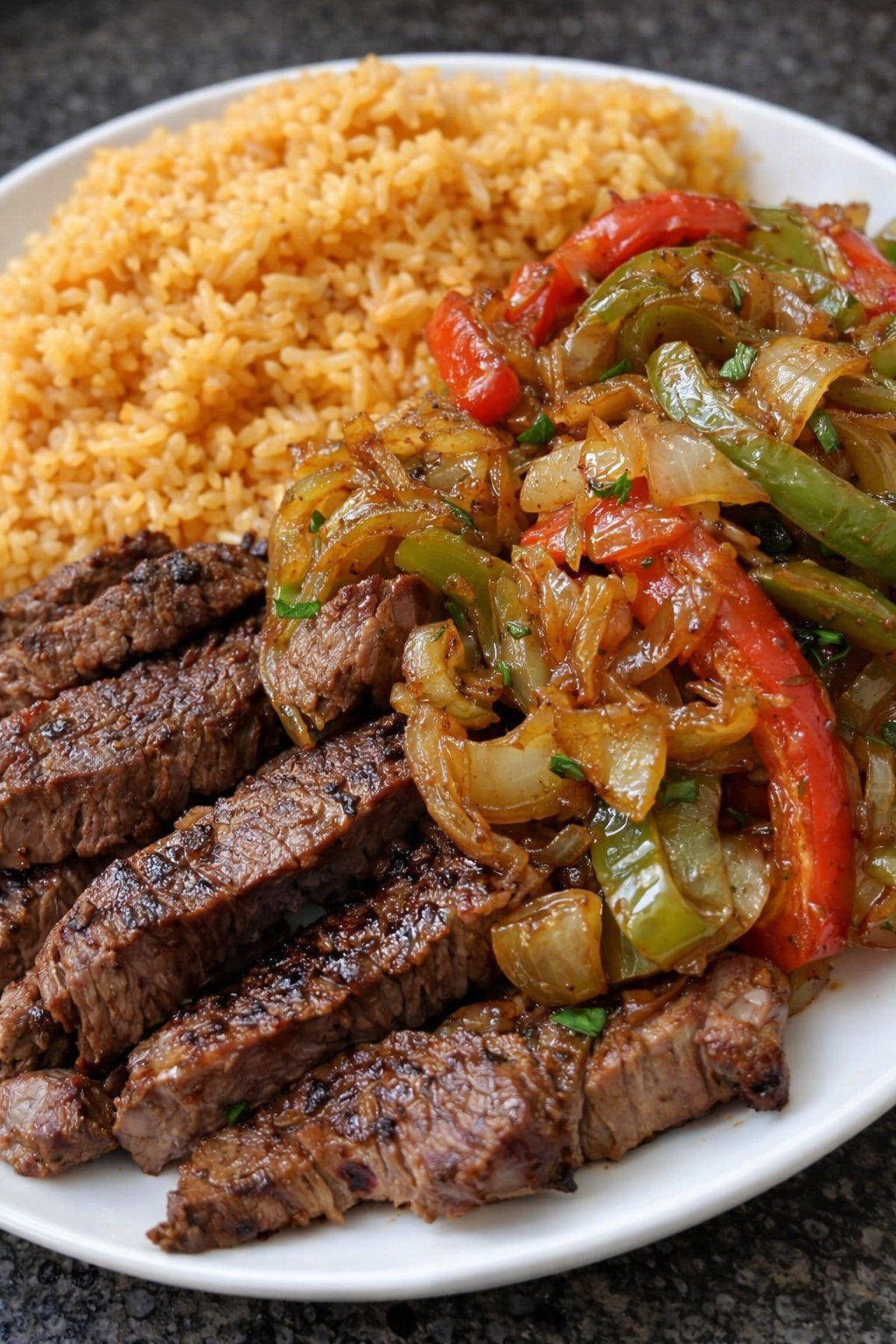
I’m Jason Griffith, and today I’m sharing my go-to recipe for the Steak Fajita Plate with Seasoned Rice. This isn’t just a quick stir-fry; it’s a thoughtfully layered meal that balances citrusy, savory steak with fluffy, aromatic rice. Whether you are hosting a festive dinner or just want to upgrade your Tuesday night, this plate is a guaranteed winner.
Why I Love This Recipe
The beauty of a fajita plate lies in its versatility and the “wow” factor of the presentation. While I love a good Mexican Chicken and Rice Casserole for a cozy one-pan meal, these fajitas offer a more interactive, fresh-off-the-grill texture.
This recipe hits all the right notes:
- The Steak: We use a bright, acidic marinade that tenderizes the beef and creates those beautiful charred edges.
- The Rice: Instead of plain white rice, we toast the grains to create a “seasoned rice” that acts as the perfect bed for the juices of the meat.
- The Ease: Aside from the marinating time, this entire meal comes together in under 30 minutes.
Ingredients You’ll Need
For the Steak & Marinade
- 1½ lb Flank or Skirt Steak: These cuts are classic for fajitas because they soak up flavor and cook quickly.
- 2 tbsp Olive Oil: For the base of the marinade.
- Juice of 1 Lime: The acidity breaks down the muscle fibers for a tender bite.
- 2 Cloves Garlic, Minced: Fresh is always best here!
- 1 tsp Chili Powder: Adds depth and a hint of smokiness.
- 1 tsp Ground Cumin: The “secret” spice that makes it taste like authentic Mexican cuisine.
- ½ tsp Paprika: For color and warmth.
- ½ tsp Salt & ½ tsp Black Pepper: Essential seasonings.
For the Peppers & Onions
- 1 tbsp Olive Oil: For sautéing.
- 1 Red Bell Pepper & 1 Green Bell Pepper: Sliced into long strips.
- 1 Large Onion: White or yellow works perfectly.
- Salt and pepper to taste.
For the Seasoned Rice
- 1 cup Long-Grain Rice: Basmati or Jasmine also works.
- 2 tbsp Oil or Butter: To toast the rice.
- 2 cups Chicken Broth: Provides much more flavor than water.
- ½ tsp Garlic Powder & ½ tsp Onion Powder: For consistent seasoning throughout.
- ½ tsp Paprika: Gives the rice that signature golden-red hue.
- Salt to taste.
Step-by-Step Instructions
1. Marinate the Steak
In a medium bowl or a zip-top bag, whisk together the olive oil, lime juice, minced garlic, chili powder, cumin, paprika, salt, and pepper. Place your steak in the mixture, ensuring it is fully coated. Let it marinate for at least 20 minutes at room temperature, or up to 4 hours in the refrigerator.
Chef’s Note: Don’t marinate the steak overnight with this much lime juice, or the acid will start to “cook” the meat and change the texture to something mushy!
2. Cook the Seasoned Rice
While the steak soaks up the flavor, get your rice started. Heat 2 tablespoons of oil or butter in a saucepan over medium heat. Add the dry rice and stir constantly for 2–3 minutes. You want the grains to look opaque and slightly golden. This “toasting” step prevents the rice from becoming sticky.
Stir in the chicken broth and all seasonings. Bring to a boil, then immediately reduce the heat to low. Cover and simmer for 15–18 minutes. Once the liquid is absorbed, remove from heat and let it rest, covered, for 5 minutes before fluffing with a fork.
3. Sear the Steak
Wipe out a heavy skillet (cast iron is king here!) or a grill pan and set it over high heat. You want it screaming hot. Add the steak and cook for 3–5 minutes per side. For a medium-rare finish, aim for an internal temperature of 130°F to 135°F.
Remove the steak to a cutting board and let it rest for 5 minutes. This is the most important step! If you cut it too soon, all the delicious juices will run out. After resting, slice thinly against the grain.
4. Sauté the Vegetables
Using the same skillet (don’t wash it—those browned bits are flavor gold!), add a splash of oil and toss in your peppers and onions. Cook over medium-high heat for 5–7 minutes. You want them tender but still possessing a slight “snap” and some charred edges.
5. Assemble the Plate
Lay a generous portion of the seasoned rice on the plate. Top with a stack of the sliced steak and a pile of peppers and onions. Spoon any leftover juices from the steak carving board right over the top.
Tips for Success
- Slicing Against the Grain: Look for the direction the muscle fibers are running. Slice perpendicular to those lines. This shortens the fibers, making the steak melt-in-your-mouth tender.
- High Heat is Key: Don’t be afraid of a little smoke in the kitchen. A fast sear at high heat gives you that restaurant-style char without overcooking the inside.
- Extra Flavor: For a professional finish, deglaze your vegetable pan with an extra squeeze of lime juice or a tablespoon of water to pick up every last bit of seasoning.
Serving Suggestions and Pairings
Fajitas are even better with friends! If you’re hosting a crowd, you might consider setting up a Walking Taco Baralongside these plates.
Standard Toppings: * Fresh Cilantro
- Cool Sour Cream
- Sliced Avocado or Guacamole
- Pico de Gallo
Perfect Drink Pairing: Nothing cuts through the richness of the steak like a Classic Margarita. The lime in the drink echoes the lime in the marinade perfectly.
Swaps and Notes
- Protein Swap: You can easily swap the steak for chicken breast or shrimp. If using shrimp, reduce the marinating time to 10 minutes.
- Low Carb: Skip the rice and serve the steak and peppers over a bed of cauliflower rice or shredded lettuce.
- Spice it Up: If you like heat, slice up a fresh jalapeño and sauté it right along with your bell peppers.
Nutritional Information (Per Serving)
- Calories: 480 kcal
- Protein: 38g
- Carbohydrates: 42g
- Fat: 18g
- Fiber: 3g
Storage and Leftover Tips
If you happen to have leftovers, they make for an incredible lunch the next day. Store the steak and vegetables in an airtight container for up to 3 days.
Pro Tip: Leftover fajita meat and rice are the perfect filling for Sheet Pan Quesadillas. Just chop the steak into smaller bits, fold them into tortillas with cheese, and bake!
More Recipes You Will Love
If you enjoyed this Tex-Mex feast, you’ll definitely want to check out these other favorites from the Chefmaniac kitchen:
- Cozy Chicken Enchiladas – Perfect for family dinner night.
- Mexican Chicken and Rice Casserole – A great one-pan alternative to the fajita plate.
Final Thoughts
This Steak Fajita Plate is a testament to how a few simple spices and fresh ingredients can create a meal that feels truly special. It’s vibrant, filling, and incredibly satisfying to make.
Did you try this recipe? I’d love to hear how it turned out! Leave a comment below or tag us on social media with your kitchen creations. Don’t forget to follow Chefmaniac for more weekly recipes and cooking tips from Jason Griffith!