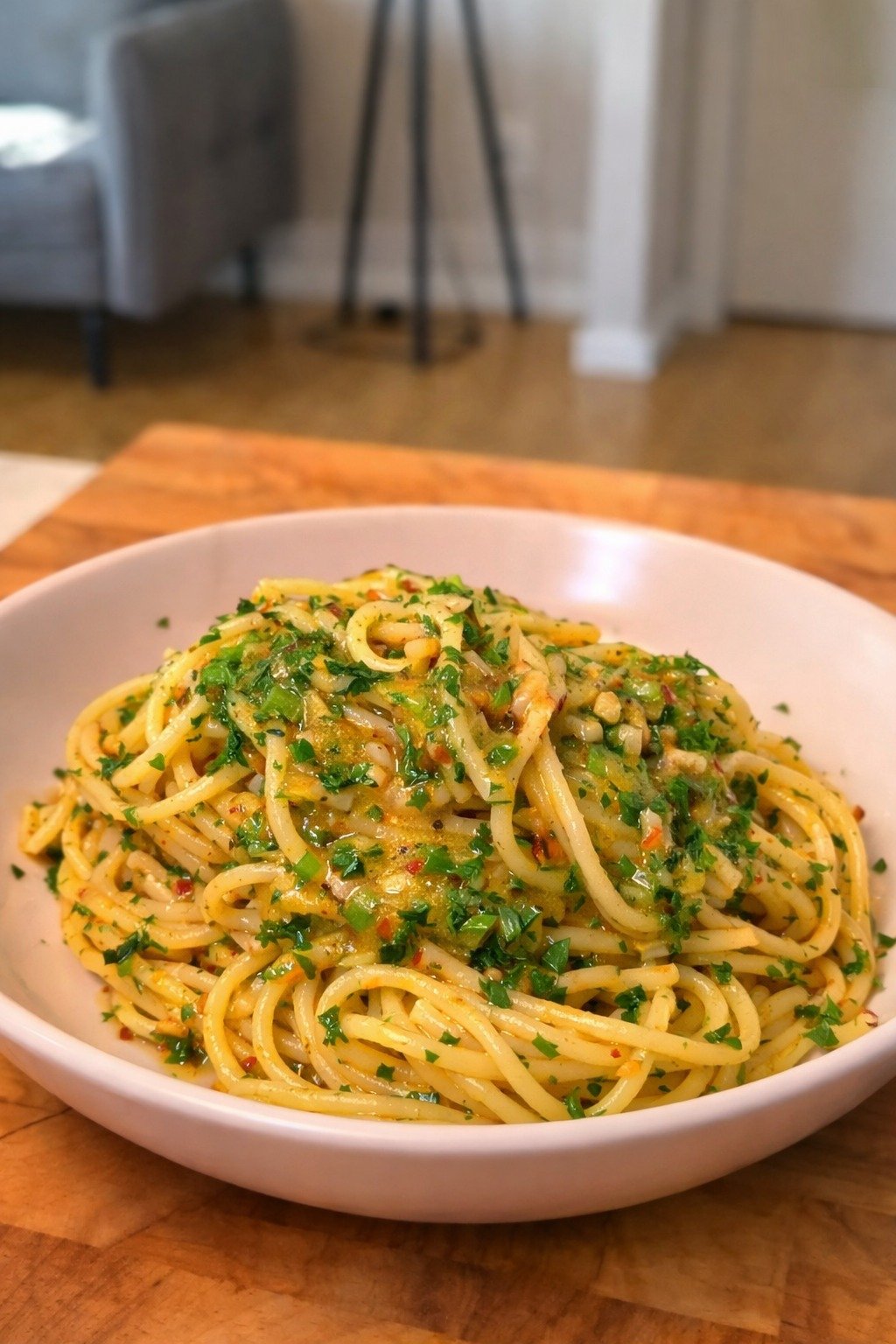

The Art of Simple: Mastering Authentic Spaghetti Aglio e Olio
If you were to peek into a professional chef’s kitchen after a long shift, chances are you’d find them standing over a stove with a bowl of Spaghetti Aglio e Olio. It is the ultimate “midnight pasta”—a dish that relies on just a handful of humble pantry staples to create something far greater than the sum of its parts.
Translated literally to “spaghetti with garlic and oil,” this Neapolitan classic is the litmus test for any home cook. While it looks simple on paper, the secret lies in the technique: achieving that elusive, glossy emulsion where the starch from the pasta water transforms golden olive oil into a silky sauce that clings to every strand of noodle.
Why I Love This Recipe
There is a profound honesty in Italian cooking that I’ve always admired. Unlike my Classic Spaghetti Recipe with Homemade Sauce, which requires hours of simmering to develop deep tomato flavors, Aglio e Olio is about speed and precision.
I love this recipe because it teaches you how to respect your ingredients. You learn exactly when garlic transitions from “fragrant” to “bitter,” and you learn how to use “liquid gold” (pasta water) to create a luxurious mouthfeel without a drop of heavy cream. It’s elegant, budget-friendly, and tastes like a summer night in Italy.
Ingredients (Serves 2)
To get that restaurant-quality finish, high-quality ingredients are non-negotiable. Since there are so few components, each one needs to shine.
- 200 g (7 oz) Spaghetti: Go for a high-quality bronze-die extruded pasta if possible; the rougher surface helps the sauce stick.
- 4–5 Garlic Cloves: Must be fresh and thinly sliced (not minced!) for the best texture.
- 60 ml (¼ cup) Extra-Virgin Olive Oil: Use the good stuff here; the flavor is the base of the dish.
- ½–1 tsp Red Pepper Flakes: Adjust based on your heat tolerance.
- 1/4 cup Fresh Parsley: Finely chopped. This adds the necessary brightness and “green” notes to cut through the fat.
- Reserved Pasta Water: Approximately 1/2 cup. This is your secret weapon.
- Salt: For the pasta water (it should taste like the sea).
- Optional: Fresh lemon zest or a dusting of Pecorino Romano.
Swaps and Notes
- The Pasta: While spaghetti is traditional, linguine or bucatini work beautifully. If you’re looking for a faster comfort meal and have an appliance handy, you might enjoy my Instant Pot Lasagna for a different take on Italian night.
- The Garlic: If you find raw garlic too pungent, you can “mellow” the sliced cloves by soaking them in the olive oil for 10 minutes before heating.
- The Heat: If you aren’t a fan of red pepper flakes, try a pinch of black pepper or omit the spice entirely for a pure garlic-forward profile.
Step-by-Step Instructions
1. Boil the Pasta
Bring a large pot of water to a rolling boil. Add enough salt so that the water tastes seasoned (aim for about 1% salinity). Drop your spaghetti and cook until just before al dente. Critical Step: Before draining, scoop out about 1/2 cup of the starchy pasta water.
2. Infuse the Oil
While the pasta is boiling, place a wide skillet over medium-low heat. Add the extra-virgin olive oil and the sliced garlic. You want to “sweat” the garlic slowly. It should sizzle softly, turning a pale golden color. If the garlic turns dark brown or black, discard it and start over—bitter garlic will ruin the dish.
3. Add the Spice
Once the garlic is fragrant and golden (about 90 seconds), stir in the red pepper flakes. Let them toast in the oil for about 10–15 seconds to release their oils and color.
4. Create the Emulsion
Add the drained pasta directly into the skillet along with about 1/4 cup of the reserved pasta water. Increase the heat to medium and toss vigorously with tongs. The starch in the water and the olive oil will begin to marry, creating a creamy, glossy coating. Add more water if the pasta looks dry.
5. The Finishing Touches
Remove the pan from the heat. Fold in the fresh parsley and a pinch of salt if needed. If you’re feeling fancy, a quick grate of lemon zest provides a beautiful aromatic lift. Serve immediately while the sauce is at its peak silkiness.
Tips for Success
- Don’t Walk Away: Garlic can go from perfect to burnt in a matter of seconds. Stay by the pan.
- Pan Choice: Use a large stainless steel or carbon steel skillet. You need enough surface area to toss the pasta effectively.
- The Water is Key: Never skip the pasta water. Without it, you just have oily noodles. With it, you have a cohesive sauce.
Serving Suggestions and Pairings
To make this a full meal, I highly recommend starting with a sophisticated appetizer like this Baked Brie. The creaminess of the cheese balances the sharp garlic and spice of the pasta.
For drinks, keep it refreshing. If you want something spirited, a Classic Margarita actually pairs surprisingly well with the citrus and spice of the dish. For a non-alcoholic option, my Blueberry Lemonade is a fantastic palate cleanser.
Nutritional Information (Per Serving)
- Calories: 480 kcal
- Fat: 28g
- Carbohydrates: 42g
- Protein: 8g
- Fiber: 3g
Storage and Leftover Tips
Pasta Aglio e Olio is best eaten fresh. However, if you have leftovers:
- Refrigerate: Keep in an airtight container for up to 2 days.
- Reheat: Do not microwave on high, as it will make the oil greasy. Instead, return it to a skillet with a splash of water or a tiny bit of broth to loosen the sauce back up.
More Recipes You Will Love
If you enjoyed the simplicity of this dish, check out these other favorites from the ChefManiac kitchen:
Final Thoughts
Spaghetti Aglio e Olio is a reminder that you don’t need a pantry full of expensive ingredients to eat like royalty. It’s about the ritual of cooking and the joy of simple flavors.
I’d love to hear how yours turned out! Did you add lemon? Did you go heavy on the red pepper? Leave a comment below or tag us on social media. Don’t forget to follow for more chef-tested recipes every week!