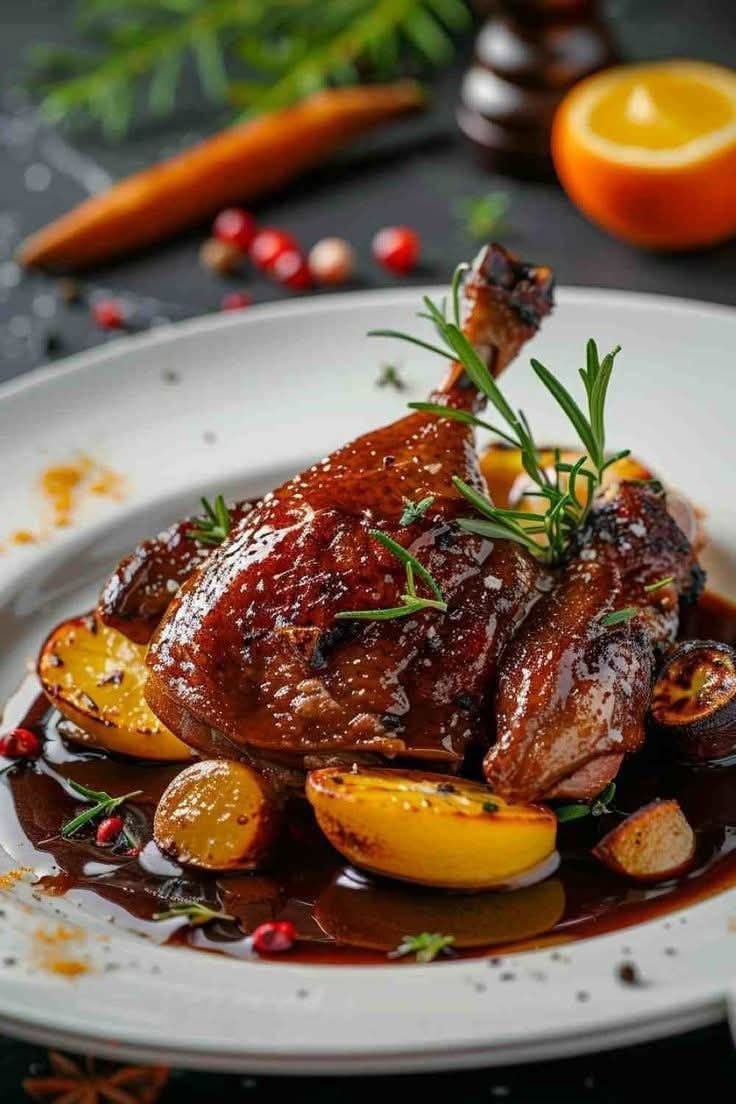
Crispy Roast Duck with Orange Sauce: The Ultimate Restaurant-Quality Guide

Print it, save it, or add it to your recipe binder.
There is something undeniably sophisticated about a roast duck. While many home cooks feel intimidated by waterfowl, I’m here to tell you that achieving that legendary “shatter-crisp” skin and succulent meat is much easier than you think. Today, we are diving into a timeless classic: Crispy Duck with Orange Sauce (Canard à l’Orange).
Why I Love This Recipe
This recipe is the perfect balance of indulgence and brightness. Duck is naturally rich and fatty, which is why the acidic, sweet, and tangy orange sauce is its ultimate culinary partner. It cuts through the richness, cleansing the palate with every bite. Whether you are hosting a holiday dinner or simply want to elevate a Sunday night, this dish brings a “wow factor” that few other proteins can match. Plus, the aroma of five-spice and citrus wafting through your kitchen is absolutely intoxicating.
Before we get started, if you’re looking for more ways to impress your guests, you might want to try starting your evening with this baked brie appetizer, which is my favorite effortless way to kick off a dinner party.
Ingredients You’ll Need
For the Duck:
- 1 Whole Duck (2-3 kg): Ensure it is fully thawed if frozen.
- Salt & Black Pepper: Essential for seasoning the cavity and the skin.
- Chinese Five-Spice Powder: Adds a subtle, warm depth of flavor.
- 1 Fresh Orange: Cut into quarters for aromatics.
- 4 Cloves of Garlic: Smashed to release their oils.
- Fresh Herbs: 2 branches of thyme or rosemary.
For the Zesty Orange Sauce:
- 1 cup Fresh Orange Juice: Freshly squeezed is always best for flavor.
- 1 tbsp Orange Zest: For that essential citrus oil punch.
- 1/4 cup Miel (Honey): To balance the acidity with sweetness.
- 1/4 cup White Wine (or Chicken Stock): Adds body and complexity.
- 2 tbsp Soy Sauce: For an umami-rich saltiness.
- 1 tbsp Cornstarch: To create that glossy, pourable consistency.
Swaps and Notes
- The Wine: If you prefer not to cook with alcohol, a high-quality chicken stock works perfectly as a 1:1 replacement.
- The Spice: If Chinese Five-Spice isn’t in your pantry, a pinch of ground cloves and cinnamon can mimic that warmth.
- The Citrus: While Navel oranges are standard, Blood oranges make for a stunning, deep-red sauce during winter months.
Step-by-Step Instructions
1. Prep the Duck
Preheat your oven to 170°C (340°F). Rinsing the duck is optional, but patting it dry is mandatory. Use paper towels to remove every bit of moisture from the skin—this is the secret to crispiness. Season the internal cavity generously with salt, pepper, and five-spice. Stuff the cavity with the orange quarters, smashed garlic, and herbs.
Crucial Step: Use a sharp skewer to prick the skin all over. Focus on the fatty areas around the legs and breast, but do not pierce the meat. This creates “exit ramps” for the fat to render out.
2. The Slow Roast
Place the duck on a rack inside a roasting pan, breast-side up.
- Hour 1: Roast at 170°C.
- Hour 2: Carefully flip the duck so it is breast-side down. This helps the fat from the back render and keeps the breast meat moist.
- The Finish: For the final 15 minutes, flip it breast-side up again and crank the heat to 200°C (400°F). Watch it closely as the skin turns mahogany and becomes crackly-crisp.
3. Craft the Orange Sauce
While the duck is finishing, combine the orange juice, zest, honey, wine, and soy sauce in a small saucepan. Bring to a simmer over medium heat for about 5 minutes. Whisk your cornstarch with a little water to create a slurry, then stir it into the sauce. Let it bubble until it coats the back of a spoon.
4. Serving
Let the duck rest for at least 15 minutes. This allows the juices to redistribute so the meat stays tender. Carve and drizzle the warm sauce over the top.
Tips for Success
- Dry Skin is Key: If you have time, leave the duck uncovered in the fridge overnight. This air-dries the skin for a superior crunch.
- Save the Fat: Don’t throw away the liquid gold in the bottom of your roasting pan! Filter it and keep it in a jar in the fridge for the best roasted potatoes of your life.
- Temperature Check: Use a meat thermometer to ensure the thickest part of the thigh reaches 75°C (165°F).
Serving Suggestions and Pairings
This duck pairs beautifully with earthy sides like roasted root vegetables or a creamy potato purée. To balance the richness of the meal, I recommend a refreshing beverage. For a sunny afternoon dinner, this blueberry lemonade provides a lovely tart contrast. If you’re in the mood for a cocktail, a classic margarita offers the lime acidity needed to cut through the duck fat perfectly.
Nutritional Information (Per Serving)
- Calories: 480 kcal
- Protein: 28g
- Fat: 34g
- Carbohydrates: 12g
- Sugar: 9g
Storage and Leftover Tips
Leftover duck can be stored in an airtight container for up to 3 days. To reheat, avoid the microwave as it will make the skin rubbery. Instead, place it in a hot oven or an air fryer at 180°C for 5 minutes to revive that crunch. Leftover duck meat is also incredible in a breakfast hash—you could even use it as a high-protein filling for this 3-ingredient egg wrap.
More Recipes You Will Love
If you enjoyed this festive meal, you should definitely check out these other favorites from the Chefmaniac kitchen:
- For the perfect holiday dessert, these pecan pie bars are my favorite make-ahead treat.
- Looking for more citrus inspiration? Try our signature citrus-infused bakes.
Final Thoughts
Cooking a whole duck is a rewarding experience that makes any dinner feel like a celebration. Don’t be afraid of the fat—embrace it, render it, and enjoy the most flavorful poultry you’ve ever tasted!
I’d love to hear how your duck turned out! Please leave a comment below or tag us on social media with your photos. Happy cooking!
Crispy Roast Duck with Orange Sauce: The Ultimate Restaurant-Quality Guide
Crispy Duck with Orange Sauce (Canard à l’Orange)
Prep: min | Cook: min | Total: min
Servings:
Ingredients
- 1 Whole Duck (2-3 kg): Ensure it is fully thawed if frozen.
- Salt & Black Pepper: Essential for seasoning the cavity and the skin.
- Chinese Five-Spice Powder: Adds a subtle, warm depth of flavor.
- 1 Fresh Orange: Cut into quarters for aromatics.
- 4 Cloves of Garlic: Smashed to release their oils.
- Fresh Herbs: 2 branches of thyme or rosemary.
- 1 cup Fresh Orange Juice: Freshly squeezed is always best for flavor.
- 1 tbsp Orange Zest: For that essential citrus oil punch.
- 1/4 cup Miel (Honey): To balance the acidity with sweetness.
- 1/4 cup White Wine (or Chicken Stock): Adds body and complexity.
- 2 tbsp Soy Sauce: For an umami-rich saltiness.
- 1 tbsp Cornstarch: To create that glossy, pourable consistency.
- Swaps and Notes:
- The Wine: If you prefer not to cook with alcohol, a high-quality chicken stock works perfectly as a 1:1 replacement.
- The Spice: If Chinese Five-Spice isn't in your pantry, a pinch of ground cloves and cinnamon can mimic that warmth.
- The Citrus: While Navel oranges are standard, Blood oranges make for a stunning, deep-red sauce during winter months.
- Step-by-Step Instructions:
- 1. Prep the Duck:
- 2. The Slow Roast:
- Hour 1: Roast at 170°C.
- Hour 2: Carefully flip the duck so it is breast-side down. This helps the fat from the back render and keeps the breast meat moist.
- The Finish: For the final 15 minutes, flip it breast-side up again and crank the heat to 200°C (400°F). Watch it closely as the skin turns mahogany and becomes crackly-crisp.
- 3. Craft the Orange Sauce:
- 4. Serving:
- Tips for Success:
- Dry Skin is Key: If you have time, leave the duck uncovered in the fridge overnight. This air-dries the skin for a superior crunch.
- Save the Fat: Don't throw away the liquid gold in the bottom of your roasting pan! Filter it and keep it in a jar in the fridge for the best roasted potatoes of your life.
- Temperature Check: Use a meat thermometer to ensure the thickest part of the thigh reaches 75°C (165°F).
- Serving Suggestions and Pairings:
- Nutritional Information (Per Serving):
- Calories: 480 kcal
- Protein: 28g
- Fat: 34g
- Carbohydrates: 12g
- Sugar: 9g
- Storage and Leftover Tips:
- More Recipes You Will Love:
- For the perfect holiday dessert, these pecan pie bars are my favorite make-ahead treat.
- Looking for more citrus inspiration? Try our signature citrus-infused bakes.
- Final Thoughts:
Instructions
Nutrition
- Calories: 480 kcal
- Fat: 34g
- Carbs: 12g
- Protein: 28g
Rate This Recipe
Average Rating: 0 (0 votes)