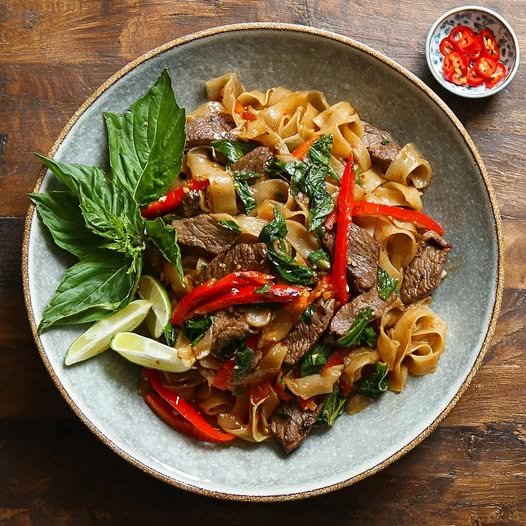
Authentic Pad Kee Mao with Flank Steak: Better Than Takeout Thai Noodles

Print it, save it, or add it to your recipe binder.
Drunken Noodles with Beef (Pad Kee Mao): Spicy Thai Recipe Made Easy
If you’ve ever had Pad Kee Mao—Thai Drunken Noodles—you know this dish delivers a flavor punch that few other noodle dishes can match. It’s spicy, savory, slightly sweet, and loaded with fragrant Thai basil. While it might sound exotic, I’m here to tell you that making restaurant-quality Pad Kee Mao at home is surprisingly straightforward, and it’s always faster than waiting for delivery.
This recipe for Pad Kee Mao with Beef takes thin-sliced flank steak, wide rice noodles, and a powerful sauce blend, then stir-fries them with fresh chilies, peppers, and that all-important holy basil. Get ready to elevate your weeknight dinner game.
Why I Love This Recipe
I’m a sucker for intense, high-heat cooking, and Pad Kee Mao is the ultimate stir-fry experience. It demands attention and high heat, rewarding you with those signature charred, smoky noodle edges—what the Cantonese call “wok hei.” Beyond the technique, the flavor profile is addictive. It hits all five tastes:
- Sweet: From the brown sugar.
- Sour: From the hint of fresh lime at the end.
- Salty: From the multiple layers of soy and oyster sauce.
- Umami: A deep savory note from the fish sauce and beef.
- Spicy: The signature, heart-pounding heat from the Thai bird’s-eye chilies.
It’s a symphony in a skillet, and honestly, once you try this recipe, you might find yourself craving it more than Classic Spaghetti Recipe with Homemade Sauce for a comforting weeknight meal.
Ingredients List
| Ingredient | Quantity | Notes |
| Wide Rice Noodles | 8 oz | Look for the flat, fresh or dried variety. |
| Flank Steak | 1 lb | Thinly sliced against the grain. |
| Cornstarch | 1 Tbsp | For velveting the beef. |
| Reduced-Sodium Soy Sauce | 4 tsp (divided) | Used for both the marinade and the sauce. |
| Fish Sauce | 1 Tbsp | Essential for authentic Thai flavor. |
| Oyster Sauce | 1 Tbsp | Adds richness and a hint of sweetness. |
| Dark Soy Sauce | 2 tsp | For color and a deeper, less salty soy flavor. |
| Brown Sugar | 1 tsp | Balances the heat and salt. |
| Neutral Oil | 3 Tbsp (divided) | Canola, peanut, or avocado oil work best for high heat. |
| Medium Yellow Onion | 1 (sliced) | |
| Large Red Bell Pepper | 1 (sliced) | |
| Thai Bird’s-Eye Chilies | 5–8 | Adjust quantity to your spice tolerance! |
| Garlic | 3 cloves (minced) | |
| Fresh Thai Basil Leaves | 1½ cups | Holy Basil is traditional, but Thai Basil is more common and works perfectly. |
| Lime Wedges | For garnish | |
| Bean Sprouts | For garnish | Optional, but adds a great crunch. |
Export to Sheets
Swaps and Notes
- Noodles: While wide rice noodles are traditional (and best for that “drunken” texture), you can substitute dried fettuccine or linguine in a pinch, though the flavor profile will change slightly.
- Protein: Pad Kee Mao works with almost any protein. Swap the beef for chicken (you’ll love the flavors if you also like my Easy Cheesy Chicken Sliders with Marinara Garlic Butter), shrimp, or firm tofu. Adjust cooking time accordingly.
- Heat: Bird’s-eye chilies are hot. For a milder dish, use 1-2 jalapeño or serrano peppers instead, or simply omit the fresh chilies and add a pinch of chili flakes for color.
- Thai Basil: Do not substitute regular Italian basil. The flavor is totally different. If you cannot find Thai basil, skip it—don’t use the wrong kind.
Step-by-Step Directions
1. Prep the Noodles and Beef:
- Soak the 8 oz wide rice noodles in boiling-hot water (off the heat) for about 10 minutes, or until just tender. Drain and rinse them well in cold water to stop the cooking and prevent sticking. Set aside.
- In a small bowl, toss the 1 lb thin-sliced flank steak with the 1 Tbsp cornstarch and 2 tsp of the reduced-sodium soy sauce. This is called velveting and ensures the meat stays tender.
2. Mix the Sauce:
- In a separate small bowl, whisk together the remaining 2 tsp soy sauce, 1 Tbsp fish sauce, 1 Tbsp oyster sauce, 2 tsp dark soy sauce, and 1 tsp brown sugar. Set the sauce aside—having it ready is crucial for stir-frying.
3. Sear the Beef:
- Heat 1 Tbsp of neutral oil in a large wok or skillet over very high heat. When the oil is shimmering, add the steak and sear it for 2–3 minutes until it’s browned and just cooked through. Do not overcrowd the pan; cook in batches if necessary. Remove the beef and set it aside.
4. Stir-Fry the Aromatics and Veggies:
- Add the remaining 2 Tbsp of neutral oil to the wok.
- Toss in the sliced yellow onion, sliced red bell pepper, and the Thai bird’s-eye chilies. Stir-fry for about 3 minutes until the vegetables start to soften.
- Add the 3 minced garlic cloves and stir-fry for only 30 seconds—don’t let the garlic burn!
5. Combine and Finish:
- Add the drained noodles and the cooked steak back into the wok with the vegetables.
- Pour the prepared sauce mixture over everything.
- Toss quickly and vigorously for about 1 minute until the noodles are evenly coated and heated through. The high heat should slightly caramelize the sauce on the noodles.
- Remove the wok from the heat immediately. Stir in the 1½ cups fresh Thai basil leaves. The residual heat will wilt the basil beautifully.
- Serve immediately with lime wedges and a sprinkle of bean sprouts for garnish.
Tips for Success
- Use High Heat: This is not a slow simmer dish. You need high, scorching heat to achieve that authentic smoky flavor and prevent the noodles from becoming mushy.
- Prep Everything First (Mise en Place): Stir-frying happens fast. Have all your ingredients—sauce, beef, noodles, and veggies—prepped and next to the stove before you turn on the heat.
- Don’t Overcook the Noodles: The noodles will finish cooking in the wok. Soak them until they are just al dente (a little chewy). If they’re too soft to start, they’ll break apart when you toss them.
- The Sauce is the Boss: Don’t skip the fish sauce or dark soy sauce. They are non-negotiable for the right depth of flavor and color.
Serving Suggestions and Pairings
Pad Kee Mao is a hearty meal all by itself, but for a full Thai-inspired spread, consider balancing the heat with something cool and refreshing.
- Cooling Drink: The spicy heat of the noodles is best cut by a sweet-tart beverage. A glass of This Blueberry Lemonade is My Favorite Refreshing Drink for Sunny Days works wonders.
- Appetizer: Start the meal with a light, easy appetizer like Edamame sprinkled with sea salt, or try These Sheet Pan Quesadillas are My Favorite Way to Feed a Crowd Fast if you’re feeding a crowd.
- Side Dish: A simple bowl of Cucumber Salad dressed with a little rice vinegar and sugar is a great contrast to the rich, spicy noodles.
Nutritional Information (Approximate)
| Component | Per Serving (Approximate) |
| Kcal | ∼450 kcal |
| Servings | 4 |
Export to Sheets
Note: This is an estimated value based on the ingredients provided and does not account for exact portion sizes or preparation variables.
Storage and Leftover Tips
Leftover Pad Kee Mao can be stored in an airtight container in the refrigerator for up to 3 days.
Reheating: Reheat gently in a lightly oiled skillet or wok over medium-high heat. The noodles may stick together, so add a splash of water or broth to help loosen them up as they heat. Avoid the microwave, which can make the noodles rubbery.
More Recipes You Will Love
If you enjoyed the deep, savory flavors and high-heat technique of this Pad Kee Mao, you might also enjoy these other global comfort food recipes:
- This Cajun Chicken Sausage Gumbo is My Favorite Bowl of Southern Comfort – Another high-flavor, satisfying main dish.
- Easy Cheesy Chicken Sliders with Marinara Garlic Butter – A simple yet cheesy crowd-pleaser for a different kind of quick meal.
Final Thoughts
Pad Kee Mao—Drunken Noodles—is one of those recipes that genuinely tastes like you spent hours making it, when in reality, it’s done in under 40 minutes. It’s proof that bold, complex flavors don’t have to be complicated. Give it a shot, don’t be shy with the heat, and savor the smoky results!
I’d love to hear your thoughts! Did you stick with 8 chilies or play it safe? Let me know in the comments below, and don’t forget to follow Chef Maniac for more weeknight winners!

Authentic Pad Kee Mao with Flank Steak: Better Than Takeout Thai Noodles
Drunken Noodles with Beef (Pad Kee Mao): Spicy Thai Recipe Made Easy
Prep: min | Cook: min | Total: min
Servings:
Ingredients
Instructions
- 1. Prep the Noodles and Beef:
- Soak the 8 oz wide rice noodles in boiling-hot water (off the heat) for about 10 minutes, or until just tender. Drain and rinse them well in cold water to stop the cooking and prevent sticking. Set aside.
- In a small bowl, toss the 1 lb thin-sliced flank steak with the 1 Tbsp cornstarch and 2 tsp of the reduced-sodium soy sauce. This is called velveting and ensures the meat stays tender.
- 2. Mix the Sauce:
- In a separate small bowl, whisk together the remaining 2 tsp soy sauce, 1 Tbsp fish sauce, 1 Tbsp oyster sauce, 2 tsp dark soy sauce, and 1 tsp brown sugar. Set the sauce aside—having it ready is crucial for stir-frying.
- 3. Sear the Beef:
- Heat 1 : Tbsp of neutral oil in a large wok or skillet over very high heat. When the oil is shimmering, add the steak and sear it for 2–3 minutes until it’s browned and just cooked through. Do not overcrowd the pan; cook in batches if necessary. Remove the beef and set it aside.
- 4. Stir-Fry the Aromatics and Veggies:
- Add the remaining 2 : Tbsp of neutral oil to the wok.
- Toss in the sliced yellow onion, sliced red bell pepper, and the Thai bird’s-eye chilies. Stir-fry for about 3 minutes until the vegetables start to soften.
- Add the 3 minced garlic cloves and stir-fry for only 30 seconds—don’t let the garlic burn!
- 5. Combine and Finish:
- Add the drained noodles and the cooked steak back into the wok with the vegetables.
- Pour the prepared sauce mixture over everything.
- Toss quickly and vigorously for about 1 minute until the noodles are evenly coated and heated through. The high heat should slightly caramelize the sauce on the noodles.
- Remove the wok from the heat immediately. Stir in the 1½ cups fresh Thai basil leaves. The residual heat will wilt the basil beautifully.
- Serve immediately with lime wedges and a sprinkle of bean sprouts for garnish.
- Tips for Success: Use High Heat: This is not a slow simmer dish. You need high, scorching heat to achieve that authentic smoky flavor and prevent the noodles from becoming mushy.
- Prep : Everything First (Mise en Place): Stir-frying happens fast. Have all your ingredients—sauce, beef, noodles, and veggies—prepped and next to the stove before you turn on the heat.
- Don't : Overcook the Noodles: The noodles will finish cooking in the wok. Soak them until they are just al dente (a little chewy). If they’re too soft to start, they’ll break apart when you toss them.
- The : Sauce is the Boss: Don't skip the fish sauce or dark soy sauce. They are non-negotiable for the right depth of flavor and color.
- Serving Suggestions and Pairings: Pad Kee Mao is a hearty meal all by itself, but for a full Thai-inspired spread, consider balancing the heat with something cool and refreshing.
- Cooling : Drink: The spicy heat of the noodles is best cut by a sweet-tart beverage. A glass of This Blueberry Lemonade is My Favorite Refreshing Drink for Sunny Days works wonders.
- Appetizer: Start the meal with a light, easy appetizer like Edamame sprinkled with sea salt, or try These Sheet Pan Quesadillas are My Favorite Way to Feed a Crowd Fast if you're feeding a crowd.
- Side : Dish: A simple bowl of Cucumber Salad dressed with a little rice vinegar and sugar is a great contrast to the rich, spicy noodles.
- Nutritional Information (Approximate): Export to Sheets
- Note: This is an estimated value based on the ingredients provided and does not account for exact portion sizes or preparation variables.
- Storage and Leftover Tips: Leftover Pad Kee Mao can be stored in an airtight container in the refrigerator for up to 3 days.
- Reheating: Reheat gently in a lightly oiled skillet or wok over medium-high heat. The noodles may stick together, so add a splash of water or broth to help loosen them up as they heat. Avoid the microwave, which can make the noodles rubbery.
- More Recipes You Will Love: If you enjoyed the deep, savory flavors and high-heat technique of this Pad Kee Mao, you might also enjoy these other global comfort food recipes:
Nutrition
- Calories:
- Fat:
- Carbs:
- Protein:
Rate This Recipe
Average Rating: 0 (0 votes)